
When hurricane remnants, ice storms or late-summer thunderstorms knock out power across the Carolinas, the outage can last days instead of hours. A portable generator helps, but it has limits. You’ll have to refuel it by hand, run it outdoors because its exhaust carries carbon monoxide, and power only what you can reach with extension cords.
A permanent standby generator removes most of those limits. It’s wired into your home through a transfer switch, runs on natural gas or propane, and starts on its own when the grid goes down.
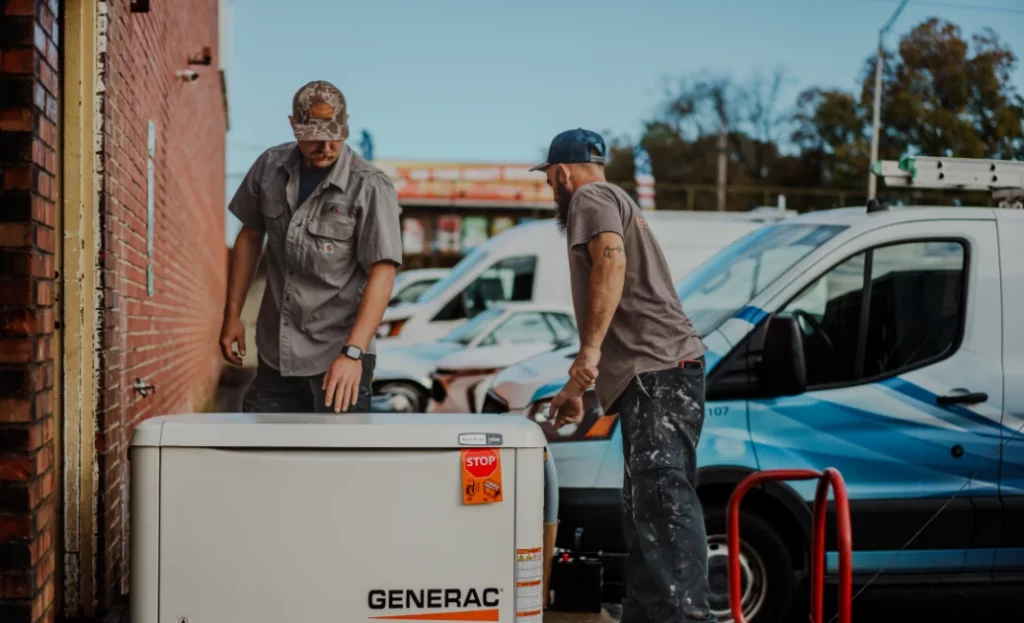
Considering an upgrade? Roland Black Heating, Cooling, Plumbing & Generators handles generator installation in Gastonia, NC, as a Generac and Kohler certified installer, and has served Gaston, Lincoln, Mecklenburg and York Counties since 1973. Our expert guide below explains how a standby generator works, how to size one, and what maintenance you need to keep it functional in case of an emergency.
How Whole-Home Standby Generators Work
A whole-home standby generator is a permanently installed engine and alternator on a pad outside your house. It connects to your electrical system through an automatic transfer switch.
Your generator can be broken down simply into two parts that do most of the work: that switch and the fuel supply.
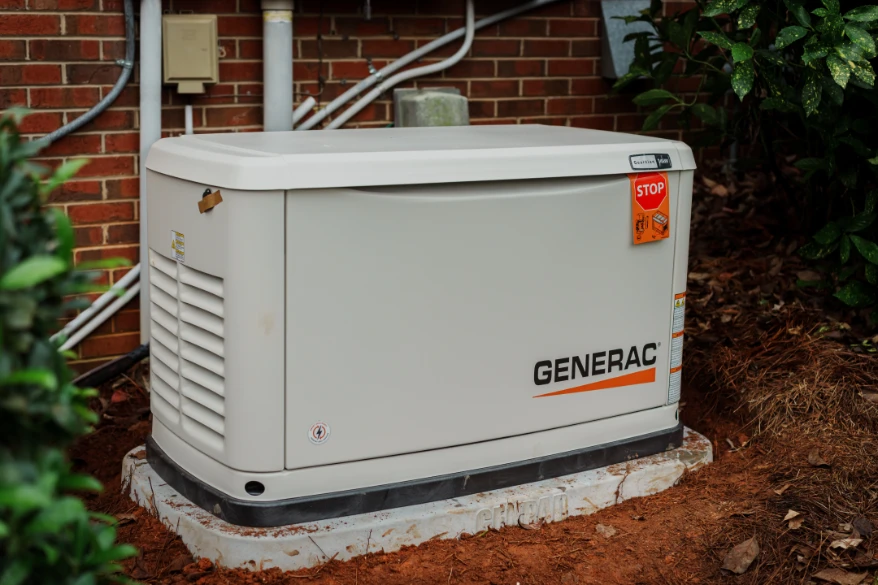
The automatic transfer switch. This switch watches the utility power coming into your home. When it drops, the controller waits for the duration of an automated delay to rule out a brief flicker or surge, then starts the engine. The system then moves your circuits onto generator power to protect your home’s comfort.
An example of this in action would be Generac’s factory setting, which starts that sequence after a five-second delay. The result? Your home can be powered within seconds.
The switch also keeps generator power from flowing back into utility lines, where it could endanger line workers. When grid power returns and holds steady, the switch moves your home back and the generator cools down before shutting off.
The fuel supply. Most standby units run on natural gas or liquid propane. Natural gas comes from your existing utility line, so it usually doesn’t run out during an outage, and it’s the common choice when your house already has gas service. Without it, you’d typically use a propane tank, and the tank’s size sets how long the generator runs before a refill.
Either fuel source needs a properly sized line to the generator for consistent generator functions. Some homes also need electrical work before the transfer switch can go in. If your main panel is older or already congested, our team may quote you an electrical panel upgrade to ensure that your system is able to function correctly after we leave.
Sizing Your Standby Generator: Essential Circuits vs. Whole-Home Backup
Your central AC determines your generator size. You can choose an essential-circuits system that skips the AC to power just the basics, like your fridge, furnace, and lights, on a smaller budget. Or, you can invest in a whole-home system to keep the AC running with everything else, which requires a larger generator, specialized hardware, and a bigger budget.
Key takeaways: Whichever size you choose, the moment utility power comes back can send a voltage spike through your wiring. Whole-home surge protection at the panel can help protect the electronics, appliances and HVAC controls your generator keeps running.
Standby Generator Maintenance and Repairs
Keeping your generator emergency-ready comes down to three things: a yearly service visit, a healthy battery and an exercise cycle that runs the engine on schedule. Those checks also catch the problems that lead to repairs, so a weak battery or a failed start gets fixed before the next outage instead of during it.
Schedule a yearly service visit. Roland Black recommends full preventive maintenance at least once a year, and more often after a heavy run during an outage. During these maintenance calls, a technician typically changes the oil and filters, checks the spark plugs and air filter, inspects fuel connections and tests the transfer switch under load.
Keep the battery tested. A weak battery is a common reason standby generators fail to start when the power goes out. Batteries lose strength gradually with age and heat. A load test at the annual visit shows whether yours is fading, so you can replace it before the next storm.
Let the exercise cycle run. Most standby generators can start themselves on a schedule set in the controller and run for a few minutes. The run circulates oil, charges the battery and confirms the engine still starts. This simple step helps keep your generator ready the next time the power goes out.
If the unit shows a warning light or makes a new noise, it may need generator repair before the next outage. You can request a free estimate from Roland Black’s generator team at 980-2063-523.
Storm Outages and Standby Generators in Gastonia, Charlotte, Lincolnton & Rock Hill
Most storm outages in and around Gastonia trace back to three kinds of weather: late-summer thunderstorms, the remnants of tropical systems moving inland and winter ice that brings down limbs and lines.
Helene showed how long a regional outage can last. More than a week after the storm hit in September 2024, Duke Energy reported that about 245,000 Carolinas customers were still without power. By then, crews had already restored more than 2.3 million.
Ice storms bring a different problem: a January outage can leave your house without heat as well as lights. A generator sized to run your furnace or heat pump keeps the house livable until crews restore service. On natural gas, it can keep running for as long as the outage lasts, with no fuel to refill.
These storms and weather events don’t stop at the state line, and neither does Roland Black’s service area. The company provides generator installation in Gastonia and services standby generators from Belmont and Lincolnton to Charlotte, Rock Hill and Fort Mill.
Standby Generator FAQs
How much does a standby generator cost to install?
Angi’s whole-house generator cost guide puts the national average at $5,157, with most projects falling between $1,512 and $8,803. 20- to 24-kW generators generally cost $5,000 to $6,500, not including labor. Your fuel line, transfer switch and any panel work needed to complete the installation may change the final price, and a local quote can fall outside these national ranges depending on what you need.
Can a standby generator run my central air conditioning or heat pump?
Yes, if the generator is sized for it. Your air conditioner or heat pump compressor draws a surge of current each time it starts, so it usually needs a larger generator than lights and outlets alone. A soft-start kit on the compressor can reduce that surge and may let a smaller generator carry the load.
How long can a whole-house generator run continuously?
On natural gas, a standby generator can keep running as long as gas keeps flowing. A propane unit runs until the tank’s empty.
Schedule Generator Installation in Gastonia, NC
Considering an upgrade? Roland Black’s generator team can assess your home’s electrical load, fuel supply and panel, then recommend an essential-circuit or whole-home system before you commit to either one. Installation estimates are free, and Roland Black backs all of its installations with 10-year warranty options.
If your generator isn’t starting or running the way it should, same-day repair service is available in most non-storm conditions. Call 980-2063-523 or schedule service online today.

